Sunday, May 3, 2009

MID-PENTECOST IS CELEBRATED

THE EASTERN CHURCCH

THIS WEEK ON WEDNESDAY


MID PENTECOST
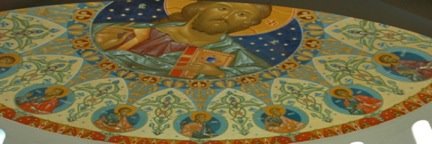
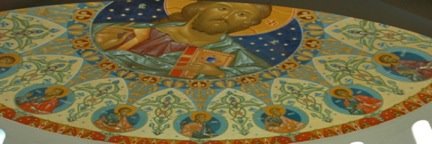
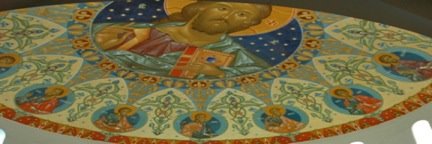
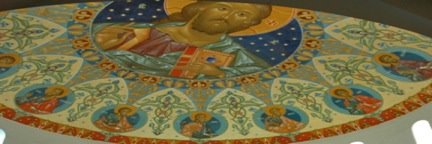
Jesus Christ Teaching in the Temple

This icon portrays Christ as a youth teaching the elders in the Temple, but it is used to commemorate his teaching in the Temple in the middle of the Feast of Tabernacles in John 7, which happens in the Autumn of the year. But it was a time for blessing the waters as a foreshadowing of the pouring out of the Holy Spirit at Pentecost. At the end of this feast, Jesus gave the promise of the Holy Spirit:
"In the last day, that great day of the feast, Jesus stood and cried, saying, If any man thirst, let him come unto me, and drink.
He that believeth on me, as the scripture hath said, out of his belly shall flow rivers of living water.
(But this spake he of the Spirit, which they that believe on him should receive: for the Holy Spirit was not yet given; because that Jesus was not yet glorified.)" -John 7:37-39
That is why this feast is midway between Paskha and Pentecost, connecting the two.


Hymn of the feast
In the midst of this Feast, O Savior, give thou my thirsty soul to drink of the waters of true worship; for thou didst call out to all, saying, Whosoever is thirsty, let him come to me and drink. Wherefore, O Christ our God, Fountain of life, glory to thee.

Mid-Pentecost or Midfeast is a feast day which occurs during the Paskhal season in the Eastern Catholic Churches which follow the Byzantine Rite.

Mid-Pentecost celebrates the midpoint between the Feasts of Paskha (Easter) and Pentecost. Specifically, it falls on the 25th day of Paskha.

Mid-Pentecost is a one-week feast which begins on the 4th Wednesday of Paskha, and continues until the following Wednesday. That is to say, it has an Afterfeast of seven days. Throughout these eight days (including the day of the feast) hymns of Mid-Pentecost are joined to those of the Paskhal season. Many of the hymns from the first day of the feast are repeated on the Apodosis (leave-taking of the feast). Although it is ranked as a Feast of the Lord and has an Afterfeast, Mid-Pentecost itself is not considered to be one of the Great Feasts of the Church year.

The liturgical texts for the feast are found in the Pentecostarion (the liturgical book containing propers for the period from Paskha to Pentecost). There are three Old Testament readings appointed for Vespers; but, uniquely, no Matins Gospel. In some places an All-Night Vigil is celebrated for this feast, though a Vigil is not called for in the Typicon (book of rubrics). At the Divine Liturgy, the reading from the Apostle is Acts 14:6-18.

The theme of the feast is Christ as Teacher, based upon the words from the Gospel of the day (John 7:14-30): "Now about the midst of the feast Jesus went up into the temple, and taught...Jesus answered them, and said, My doctrine is not mine, but his that sent me. If any man will do his will, he shall know of the doctrine, whether it be of God, or whether I speak of myself."

The icon of the feast depicts the young Jesus in the Temple in Jerusalem speaking with the Elders (Luke 2:46-47), the first biblical example of Jesus as teacher (Rabbi). In traditional Orthodox icons of this subject, the figure of Jesus is depicted larger than those of the Elders, showing his superior spiritual status.

The Troparion of the Feast hints at the encounter of Jesus with the Samaritan Woman, which will be celebrated on the following Sunday:

In the middle of the Feast, O Savior, fill my thirsting soul with the waters of godliness, as You did cry to all: 'If anyone thirst, let him come to Me and drink' (John 7:37). O Christ God, Fountain of our life, glory be to You!

The scripture verse from John 7, quoted by the Troparion, will be read on the day of Pentecost.

Mid-Pentecost, has historically been the Altar Feast of the Cathedral of Hagia Sophia in Constantinople.


Monday, April 27, 2009

St. Alphonsus Liguori’s 50 Maxims

for Attaining Perfection in the Love of Jesus Christ

To desire ardently to increase in the love of Jesus Christ
To make acts of love toward Jesus Christ. Immediately on waking, and before going to sleep, make an act of love, seeking always to unite your own will to the will of Jesus Christ.
Often to meditate on His Passion.
Always to ask Jesus Christ for His love.
To communicate often and many times in the day to make spiritual communions.
Often to visit the Most Holy Sacrament.
Every morning to receive from the hands of Jesus Christ himself your own cross.
To desire Paradise and Death in order to be able to love Jesus Christ perfectly and for all eternity.
Often to speak of the love of Jesus Christ.
To accept contradictions for the love of Jesus Christ.
To rejoice in the happiness of God.
To do that which is most pleasing to Jesus Christ, and not to refuse Him anything that is agreeable to Him.
To desire and to endeavor that all should love Jesus Christ.
To pray always for sinners and for the souls in Purgatory.
To drive from your heart every affection that does not belong to Jesus Christ.
Always to have recourse to the Most Holy Mary, that she may obtain for us the love of Jesus Christ.
To honor Mary in order to please Jesus Christ.
To seek to please Jesus Christ in all of your actions.
To offer yourself to Jesus Christ to suffer any pain for His love.
To be always determined to die rather than commit a willful venial sin.
To suffer crosses patiently, saying, “Thus it pleases Jesus Christ.”
To renounce your own pleasures for the love of Jesus Christ.
To pray as much as possible.
To practice all the mortifications that obedience permits.
To do all your spiritual exercises as if it were for the last time.
To persevere in good works in the time of aridity.
Not to do nor yet to leave undone anything through human respect.
Not to complain in sickness.
To love solitude, to be able to converse alone with Jesus Christ.
To drive away melancholy.
Often to recommend yourself to those persons who love Jesus Christ.
In temptation, to have recourse to Jesus crucified, and to Mary in her sorrows.
To trust entirely in the Passion of Jesus Christ.
After committing a fault, not to be discouraged, but to repent and resolve to amend.
To do good to those who do evil.
To speak well of all, and to excuse the intention when you cannot defend the action.
To help your neighbor as much as you can.
Neither to say nor to do anything that might vex him. And if you have been wanting in charity, to ask his pardon and to speak kindly to him.
Always to speak with mildness and in a low tone.
To offer to Jesus Christ all the contempts and persecution that you meet with.
To look upon Superiors as the representatives of Jesus Christ.
To obey without answering and without repugnance, and not to seek your own satisfaction in anything.
To like the lowest employments.
To like the poorest things.
Not to speak either good or evil of yourself.
To humble yourself even towards inferiors.
Not to excuse yourself when you are reproved.
Not to defend yourself when found fault with.
To be silent when you are disquieted.
Always to renew your determination of becoming a saint, saying,
“My Jesus, I desire to be all Yours, and You, my Christ must be all mine.”

Monday, April 20, 2009

4 YEARS LATER....


Oremus pro Pontifice nostro Benedicto.
L
et us pray for Benedict, our Pope.


Dominus conservet eum, et vivificet eum, et beatum faciat eum in terra, et non tradat eum in animam inimicorum eius. (Ps 40:3)

May the Lord preserve him, and give him life, and make him blessed upon the earth, and deliver him not up to the will of his enemies. (Ps 40:3)


Pater noster, Qui es in caelis, sanctificetur Nomen Tuum. Adveniat regnum Tuum. Fiat voluntas Tua, sicut in caelo et in terra. Panem nostrum
quotidianum da nobis hodie, et dimitte nobis debita nostra sicut et nos dimittimus debitoribus nostris. Et ne nos inducas in tentationem, sed libera nos a malo. Amen.

Our Father, Who art in Heaven, hallowed be Thy Name. Thy Kingdom, come! Thy will be done, on Earth as it is in Heaven. Give us this day our daily bread and forgive us our trespasses as we forgive those who trespass against us, and lead us not into temptation, but deliver us from evil. Amen.


A
ve Maria, gratia plena, Dominus tecum. Benedicta tu in mulieribus, et benedictus fructus ventris tui, Iesus. Sancta Maria, Mater Dei, ora pro nobis peccatoribus, nunc, et in hora mortis nostrae. Amen.

Hail Mary, full of grace! The Lord is with thee. Blessed art thou amongst
women and blessed is the fruit of thy womb, Jesus. Holy Mary, Mother of God, pray for us sinners, now and at the hour of our death. Amen.


Deus, omnium fidelium pastor et rector, famulum tuum Benedictum, quem pastorem Ecclesiae Tuae praeesse voluisti, propitius respice: da ei, quaesumus, verbo et exemplo, quibus praeest, proficere: ut ad vitam, una cum grege sibi credito, perveniat sempiternam.Per Christum, Dominum nostrum. Amen.


O God, Shepherd and Ruler of all Thy faithful people, look mercifully upon Thy servant Benedict, whom Thou hast chosen as shepherd to preside over Thy Church. Grant him, we beseech Thee, that by his word and example, he
may edify those over whom he hath charge, so that together with the flock committed to him, may he attain everlasting life. Through Christ our Lord. Amen.


Friday, April 17, 2009

The Sunday after Easter is Divine Mercy Sunday


How should we prepare for this great Feast of Mercy?

Jesus told St. Faustina that this Feast of Mercy would be a very special day when "all the divine floodgates through which graces flow are opened". (Diary 699) Our Lord made a great promise to all those souls who would go to Confession and then receive Him in Holy Communion on the Feast of Mercy, on the Sunday after Easter, which is now called Divine Mercy Sunday throughout the Catholic Church.

Jesus promised that "The soul that will go to Confession and receive Holy Communion shall obtain the complete forgiveness of sins and punishment."(Diary 699) He went on to say "I want to grant a complete pardon to the souls that will go to Confession and receive Holy Communion on the Feast of My Mercy." (Diary 1109)

We want to encourage everyone to take advantage of this incredible promise and the additional Plenary Indulgence on this great Feast of Mercy "Divine Mercy Sunday". We want you to benefit fully from these promises, and we also want you to notify all of your family and friends about them too and urge them to return to the practice of their faith!

The Image of The Divine Mercy, which Our Lord requested to be solemnly blessed and venerated on this day, will be on display in our church. Pope John Paul II said that the image portrays the Risen Jesus Christ bringing Mercy to the whole world. Our Lord said "I want the image to be solemnly blessed on the first Sunday after Easter, and I want it to be venerated publicly so that every soul may know about it. I promise that the soul that will venerate this image will not perish". (Diary 341, 48) Please take the time to visit with this Image of The Divine Mercy and venerate Jesus.

Jesus said to St. Faustina "I am offering people a vessel with which they are to keep coming for graces to the fountain of mercy. That vessel is this image with the signature: Jesus, I trust in You". (Diary 327) "The two rays denote Blood and Water. The pale ray stands for the Water which makes souls righteous. The red ray stands for the Blood which is the life of souls. These two rays issued forth from the very depths of My tender mercy when My agonized Heart was opened by a lance on the cross. …Happy is the one who will dwell in their shelter, for the just hand of God shall not lay hold of him." (Diary 299)

About the feastday "Divine Mercy Sunday", Jesus said "…tell the whole world about My inconceivable mercy. I desire that the Feast of Mercy be a refuge and shelter for all souls, and especially poor sinners. On that day the very depths of My tender mercy are open. I pour out a whole ocean of graces upon the souls who approach the Fount of My Mercy. On that day all the divine floodgates through which graces flow are opened. Let no soul fear to draw near to Me, even though its sins be as scarlet.... Mankind will not have peace until it turns to the Fount of My Mercy". (Diary 699)

Our Lord said "When you go to confession, to this fountain of My mercy, the Blood and Water which came forth from My Heart always flows down upon your soul…" and "Every time you go to confession, immerse yourself entirely in My mercy with great trust, so that I may pour the bounty of My grace upon your soul. When you approach the confessional, know this, that I Myself am waiting there for you. I am only hidden by the priest, but I Myself act in your soul. Here the misery of the soul meets the God of mercy" (1602) Make your confession before Me. The person of the priest is… only a screen. Never analyze what sort of a priest that I am making use of; open your soul in confession to Me, and I will fill it with My light." (1725)

It is required of all Catholics to confess their serious sins at least once every year. If you haven’t yet met this obligation then take advantage of this outstanding opportunity to receive an outpouring of an ocean of graces that Jesus promises on this day. Those who have already confessed their sins should make room for others.

The Church allows for one to go to Confession for up to about 20 days, before or after Divine Mercy Sunday.

Excerpts taken from the Diary of St. Faustina, copyright 1987 Marians of the Immaculate Conception, Stockbridge MA., USA

_____________________________________________________


History:
The Feast of Divine Mercy, celebrated on the Octave of Easter (the Sunday after Easter Sunday), is a relatively new addition to the Roman Catholic liturgical calendar. Celebrating the Divine Mercy of Jesus Christ, as revealed by Christ Himself to Saint Maria Faustina Kowalska, this feast was extended to the entire Catholic Church by Pope John Paul II on April 30, 2000, the day that he canonized Saint Faustina.

A plenary indulgence (the forgiveness of all temporal punishment resulting from sins that have already been confessed) is granted on the Feast of Divine Mercy if to all the faithful who go to Confession, receive Holy Communion, pray for the intentions of the Holy Father, and "in any church or chapel, in a spirit that is completely detached from the affection for a sin, even a venial sin, take part in the prayers and devotions held in honour of Divine Mercy, or who, in the presence of the Blessed Sacrament exposed or reserved in the tabernacle, recite the Our Father and the Creed, adding a devout prayer to the merciful Lord Jesus (e.g. 'Merciful Jesus, I trust in you!')."

A partial indulgence (the remission of some temporal punishment from sin) is granted to the faithful "who, at least with a contrite heart, pray to the merciful Lord Jesus a legitimately approved invocation."

_____________________________________________________


DIVINE MERCY NOVENA
Introduction:

The Divine Mercy novena began as a private devotion which Our Lord revealed to Saint Maria Faustina Kowalska. The words of the prayers were dictated by Christ Himself to Saint Faustina, and Saint Faustina recorded in her diary Our Lord's instructions for each day's prayer.

Christ asked Saint Faustina to recite the novena starting on Good Friday and ending on Divine Mercy Sunday, the Octave of Easter (the Sunday after Easter Sunday). The novena can recited at any time of the year, however, and it is often accompanied by the Divine Mercy Chaplet, which Our Lord also revealed to Saint Faustina.
First Day:

For the first day of the Divine Mercy novena, Christ asked Saint Faustina to pray for the sake of all mankind, especially sinners. She recorded the following words of Our Lord in her diary: "Today bring to Me all mankind, especially all sinners, and immerse them in the ocean of My mercy. In this way you will console Me in the bitter grief into which the loss of souls plunges Me."

Prayer for the First Day of the Divine Mercy Novena

Most Merciful Jesus, whose very nature it is to have compassion on us and to forgive us, do not look upon our sins but upon our trust which we place in Your infinite goodness. Receive us all into the abode of Your Most Compassionate Heart, and never let us escape from It. We beg this of You by Your love which unites You to the Father and the Holy Spirit.

Eternal Father, turn Your merciful gaze upon all mankind and especially upon poor sinners, all enfolded in the Most Compassionate Heart of Jesus. For the sake of His sorrowful Passion show us Your mercy, that we may praise the omnipotence of Your mercy for ever and ever. Amen.


Second Day:

For the second day, Christ asked Saint Faustina to pray for the sake of priests, monks, and nuns. She recorded the following words of Our Lord in her diary: "Today bring to Me the Souls of Priests and Religious, and immerse them in My unfathomable mercy. It was they who gave me strength to endure My bitter Passion. Through them as through channels My mercy flows out upon mankind."

Prayer for the Second Day of the Divine Mercy Novena

Most Merciful Jesus, from whom comes all that is good, increase Your grace in men and women consecrated to Your service, that they may perform worthy works of mercy; and that all who see them may glorify the Father of Mercy who is in heaven.

Eternal Father, turn Your merciful gaze upon the company of chosen ones in Your vineyard—upon the souls of priests and religious; and endow them with the strength of Your blessing. For the love of the Heart of Your Son in which they are enfolded, impart to them Your power and light, that they may be able to guide others in the way of salvation and with one voice sing praise to Your boundless mercy for ages without end. Amen.


Third Day:

For the third day, Christ asked Saint Faustina to pray for the sake of all the faithful. She recorded the following words of Our Lord in her diary: "Today bring to Me all Devout and Faithful Souls, and immerse them in the ocean of My mercy. These souls brought me consolation on the Way of the Cross. They were a drop of consolation in the midst of an ocean of bitterness."

Prayer for the Third Day of the Divine Mercy Novena

Most Merciful Jesus, from the treasury of Your mercy, You impart Your graces in great abundance to each and all. Receive us into the abode of Your Most Compassionate Heart and never let us escape from It. We beg this grace of You by that most wondrous love for the heavenly Father with which Your Heart burns so fiercely.

Eternal Father, turn Your merciful gaze upon faithful souls, as upon the inheritance of Your Son. For the sake of His sorrowful Passion, grant them Your blessing and surround them with Your constant protection. Thus may they never fail in love or lose the treasure of the holy faith, but rather, with all the hosts of Angels and Saints, may they glorify Your boundless mercy for endless ages. Amen.

Fourth Day:

For the fourth day, Christ asked Saint Faustina to pray for the sake of all those who do not believe in God and those who do not know Christ. She recorded the following words of Our Lord in her diary: "Today bring to Me those who do not believe in God and those who do not know Me, I was thinking also of them during My bitter Passion, and their future zeal comforted My Heart. Immerse them in the ocean of My mercy."

Prayer for the Fourth Day of the Divine Mercy Novena

Most compassionate Jesus, You are the Light of the whole world. Receive into the abode of Your Most Compassionate Heart the souls of those who do not believe in God and of those who as yet do not know You. Let the rays of Your grace enlighten them that they, too, together with us, may extol Your wonderful mercy; and do not let them escape from the abode which is Your Most Compassionate Heart.

Eternal Father, turn Your merciful gaze upon the souls of those who do not believe in You, and of those who as yet do not know You, but who are enclosed in the Most Compassionate Heart of Jesus. Draw them to the light of the Gospel. These souls do not know what great happiness it is to love You. Grant that they, too, may extol the generosity of Your mercy for endless ages. Amen.


Fifth Day:

For the fifth day, Christ asked Saint Faustina to pray for the sake of all those who, while Christians, have separated themselves from the Roman Catholic Church. She recorded the following words of Our Lord in her diary: "Today bring to Me the Souls of those who have separated themselves from My Church, and immerse them in the ocean of My mercy. During My bitter Passion they tore at My Body and Heart, that is, My Church. As they return to unity with the Church My wounds heal and in this way they alleviate My Passion."

Prayer for the Fifth Day of the Divine Mercy Novena

Most Merciful Jesus, Goodness Itself, You do not refuse light to those who seek it of You. Receive into the abode of Your Most Compassionate Heart the souls of those who have separated themselves from Your Church. Draw them by Your light into the unity of the Church, and do not let them escape from the abode of Your Most Compassionate Heart; but bring it about that they, too, come to glorify the generosity of Your mercy.

Eternal Father, turn Your merciful gaze upon the souls of those who have separated themselves from Your Son's Church, who have squandered Your blessings and misused Your graces by obstinately persisting in their errors. Do not look upon their errors, but upon the love of Your own Son and upon His bitter Passion, which He underwent for their sake, since they, too, are enclosed in His Most Compassionate Heart. Bring it about that they also may glorify Your great mercy for endless ages. Amen.


Sixth Day:

For the sixth day, Christ asked Saint Faustina to pray for the sake of all little children and the meek and humble. She recorded the following words of Our Lord in her diary: "Today bring to Me the Meek and Humble Souls and the Souls of Little Children, and immerse them in My mercy. These souls most closely resemble My Heart. They strengthened Me during My bitter agony. I saw them as earthly Angels, who will keep vigil at My altars. I pour out upon them whole torrents of grace. I favor humble souls with My confidence."

Prayer for the Sixth Day of the Divine Mercy Novena

Most Merciful Jesus, You yourself have said, "Learn from Me for I am meek and humble of heart." Receive into the abode of Your Most Compassionate Heart all meek and humble souls and the souls of little children. These souls send all heaven into ecstasy and they are the heavenly Father's favorites. They are a sweet-smelling bouquet before the throne of God; God Himself takes delight in their fragrance. These souls have a permanent abode in Your Most Compassionate Heart, O Jesus, and they unceasingly sing out a hymn of love and mercy.

Eternal Father, turn Your merciful gaze upon meek souls, upon humble souls, and upon little children who are enfolded in the abode which is the Most Compassionate Heart of Jesus. These souls bear the closest resemblance to Your Son. Their fragrance rises from the earth and reaches Your very throne. Father of mercy and of all goodness, I beg You by the love You bear these souls and by the delight You take in them: Bless the whole world, that all souls together may sing out the praises of Your mercy for endless ages. Amen.


Seventh Day:

For the seventh day, Christ asked Saint Faustina to pray for the sake of all those most devoted to His mercy. She recorded the following words of Our Lord in her diary: "Today bring to Me the Souls who especially venerate and glorify My Mercy, and immerse them in My mercy. These souls sorrowed most over my Passion and entered most deeply into My spirit. They are living images of My Compassionate Heart. These souls will shine with a special brightness in the next life. Not one of them will go into the fire of hell. I shall particularly defend each one of them at the hour of death."
Prayer for the Seventh Day of the Divine Mercy Novena

Most Merciful Jesus, whose Heart is Love Itself, receive into the abode of Your Most Compassionate Heart the souls of those who particularly extol and venerate the greatness of Your mercy. These souls are mighty with the very power of God Himself. In the midst of all afflictions and adversities they go forward, confident of Your mercy; and united to You, O Jesus, they carry all mankind on their shoulders. These souls will not be judged severely, but Your mercy will embrace them as they depart from this life.

Eternal Father, turn Your merciful gaze upon the souls who glorify and venerate Your greatest attribute, that of Your fathomless mercy, and who are enclosed in the Most Compassionate Heart of Jesus. These souls are a living Gospel; their hands are full of deeds of mercy, and their hearts, overflowing with joy, sing a canticle of mercy to You, O Most High! I beg You O God: Show them Your mercy according to the hope and trust they have placed in You. Let there be accomplished in them the promise of Jesus, who said to them that during their life, but especially at the hour of death, the souls who will venerate this fathomless mercy of His, He, Himself, will defend as His glory. Amen.


Eighth Day:

For the eighth day, Saint Faustina recorded these words of Christ: "Today bring to Me the Souls who are in the prison of Purgatory, and immerse them in the abyss of My mercy. Let the torrents of My Blood cool down their scorching flames. All these souls are greatly loved by Me. They are making retribution to My justice. It is in your power to bring them relief. Draw all the indulgences from the treasury of My Church and offer them on their behalf. Oh, if you only knew the torments they suffer, you would continually offer for them the alms of the spirit and pay off their debt to My justice."

Prayer for the Eighth Day of the Divine Mercy Novena

Most Merciful Jesus, You Yourself have said that You desire mercy; so I bring into the abode of Your Most Compassionate Heart the souls in Purgatory, souls who are very dear to You, and yet, who must make retribution to Your justice. May the streams of Blood and Water which gushed forth from Your Heart put out the flames of Purgatory, that there, too, the power of Your mercy may be celebrated.

Eternal Father, turn Your merciful gaze upon the souls suffering in Purgatory, who are enfolded in the Most Compassionate Heart of Jesus. I beg You, by the sorrowful Passion of Jesus Your Son, and by all the bitterness with which His most sacred Soul was flooded: Manifest Your mercy to the souls who are under Your just scrutiny. Look upon them in no other way but only through the Wounds of Jesus, Your dearly beloved Son; for we firmly believe that there is no limit to Your goodness and compassion. Amen.


Ninth Day:

For the ninth day, Christ asked Saint Faustina to pray for the sake of all the souls who have become lukewarm in their belief. She recorded the following words of Our Lord in her diary: "Today bring to Me the Souls who have become Lukewarm, and immerse them in the abyss of My mercy. These souls wound My Heart most painfully. My soul suffered the most dreadful loathing in the Garden of Olives because of lukewarm souls. They were the reason I cried out: 'Father, take this cup away from Me, if it be Your will.' For them, the last hope of salvation is to run to My mercy."

Prayer for the Ninth Day of the Divine Mercy Novena

Most compassionate Jesus, You are Compassion Itself. I bring lukewarm souls into the abode of Your Most Compassionate Heart. In this fire of Your pure love, let these tepid souls who, like corpses, filled You with such deep loathing, be once again set aflame. O Most Compassionate Jesus, exercise the omnipotence of Your mercy and draw them into the very ardor of Your love, and bestow upon them the gift of holy love, for nothing is beyond Your power.

Eternal Father, turn Your merciful gaze upon lukewarm souls who are nonetheless enfolded in the Most Compassionate Heart of Jesus. Father of Mercy, I beg You by the bitter Passion of Your Son and by His three-hour agony on the Cross: Let them, too, glorify the abyss of Your mercy. Amen.

_____________________________________________________


Tuesday, April 14, 2009

BRIGHT WEEK IN THE EASTERN RITE

http://www.mliles.com/melkite/images/anesti.jpg
Bright Week or Renewal Week is the name used by the Eastern Churches for the period of seven days beginning on Paskha (Easter) and continuing up to (but not including) the following Sunday, which is known as Thomas Sunday. Latin rite and other Christian groups such as Anglicans refer to this period as Easter Week, not to be confused with the Octave of Easter, which includes the following Sunday.

The entire week following Paskha is to be set aside by Eastern Rite Christians for the celebration of the Resurrection. According to the 66th canon of the Council in Trullo: "from the holy day of the Resurrection of Christ our God until New Sunday (i.e. Thomas Sunday) for a whole week the faithful in the Holy Churches should continually be repeating psalms, hymns and spiritual songs, rejoicing and celebrating Christ, and attending to the reading of the Divine Scriptures and delighting in the Holy Mysteries. For in this way shall we be exalted with Christ; raised up together with Him. For this reason on the aforesaid days that by no means there be any horse races or any other public spectacle".


Liturgical aspects

The entire week is considered to be one continuous day, and the name of each day of the week is called "Bright" (e.g., "Bright Monday"). Every service during the week is completely different than at any other time of the year. Everything in the services is sung joyfully rather than read. Normally, the entire Psalter is read during the course of a week (and twice a week during Great Lent), but during Bright Week no psalms at all are read. Each of the Little Hours is replaced by a special service known as the Paskhal Hours. The normal Prayers Before Communion are replaced with the Paskhal Canon.

The hymns chanted every day are identical to those chanted on the Sunday of Paskha, with the exception of a few parts that are taken from the Octoechos (the "Book of the Eight Tones"). Each day has a different tone assigned to it: Easter Sunday is Tone One, Bright Monday is Tone Two, and so on through the eight tones (skipping Tone Seven, the "Grave Tone"): Sunday of Paskha (Tone One), Bright Monday (Tone Two), Bright Tuesday (Tone Three), Bright Wednesday (Tone Four), Bright Thursday (Tone Five), Bright Friday (Tone Six), Bright Saturday (Tone Eight).

During all of Bright Week the Holy Doors on the Iconostasis are kept open—the only time of the year when this occurs. The open doors represent the stone rolled away from the Tomb of Christ, and the Epitaphios (Slavonic: Plashchanitza / English Shroud), representing the burial clothes, is visible through them on the Holy Table (altar). The doors are closed before the Ninth Hour on the eve of Thomas Sunday. However, the Afterfeast of Paskha will continue until the eve of the Ascension.

In Bright Week the normal fasting rules are suspended, and the entire week is fast-free, with special Paskhal foods, such as Paskha (a special dish made of cheese, eggs and other products that were forbidden during Great Lent), kulich and other easter breads being eaten every day. Red Easter eggs are blessed at the end of the Paskhal Vigil, and are eaten throughout Bright Week (though some are usually reserved for Radonitza - on Thomas Sunday when the joy of Paskha is brought to the cemetaries and eggs are left on the graves.).

At the end of Vespers on the Sunday of Paskha there is a Cross Procession three times around the Church, at which the Icon of the Resurrection and the Artos are carried along with the book of Gospels. On the last circuit, or on each of the 4 corners or sides of the Church building there is a reading from the Gospel and the priest sprinkles the faithful with holy water. On Bright Monday through Bright Saturday, this Cross Procession takes place in the same manner after Matins or the Divine Liturgy. Unfortunately this tradition is becoming less frequent. It can also be done after the Vespers, it is easier for those who work to come to evening vespers after work.

The above-mentioned Artos is a loaf of leavened bread that was blessed during the Paskhal Vigil, and is symbolic of the physical presence of the Resurrected Christ among the Apostles. This Artos is kept in the Church during Bright Week, either in the nave, next to the Icon of the Resurrection; in front of the Icon of Christ on the Iconostasis; or in front of the Holy Doors. Throughout the week, whenever anyone enters the church, he or she kisses the Artos as well as the icons, as a means of symbolically greeting the resurrected Christ. Special bread stamps with icons of the resurrection can be purchased for the Artos or it can be inscribed before baking with the initials of Paskha (XB-Slavonic, XA-Greek, HA-Romanian, CA-Yupik or CR-English whichever the language)

On Bright Friday, in addition to the normal Paskhal hymns and the hymns from the Octoechos, special stichera and a canon in honor of the Theotokos (Mother of God or Birthgiver of God) are chanted in commemoration of her Icon of the "Life-giving Spring."

The Life-giving Spring or Life-giving Font is both the feast day of a historic church in Constantinople and an icon of the Theotokos (Virgin Mary) which is venerated by the Eastern Churches.

The tradition surrounding the feast concerns a soldier named Leo Marcellus, who would later become the Byzantine Emperor Leo I. On April 4, 480,[1] as Leo was passing by the grove, he came across a blind man who had become lost. Leo took pity on him, led him to the pathway, seated him in the shade and began to search for water to give the thirsty man. Leo heard a voice say to him, "Do not trouble yourself, Leo, to look for water elsewhere, it is right here!" Looking about, he could see no one, and neither could he see any water. Then he heard the voice again, "Leo, Emperor, go into the grove, take the water which you will find and give it to the thirsty man. Then take the mud [from the stream] and put it on the blind man's eyes.... And build a temple [church] here ... that all who come here will find answers to their petitions." Leo did as he was told, and when the blind man's eyes were anointed he regained his sight.

After he became emperor, Leo built a church dedicated to the Theotokos of the Life-giving Spring over the site where the spring was located.[2] After the Fall of Constantinople in 1453, the church was torn down by the Turks, and the stones used to build a mosque of Sultan Bayezid. Only a small chapel remained at the site of the church. Twenty-five steps led down to the site of the spring surrounded by railing. As a result of the Greek Revolution of 1821, even this little chapel was destroyed and the spring was left buried under the rubble.

In 1833 the reforming Ottoman Sultan Mahmud II gave permission for the Christians to rebuild the church. When the foundations of the original church were discovered during the course of construction, the Sultan issued a second firman permitting not only the reconstruction of the small chapel, but of a large church according to the original dimensions. Construction was completed on December 30, 1834, and theEcumenical Patriarch, Constantine II consecrated the church on February 2, 1835.

On September 6, 1955, the church was destroyed again by Moslems during a riot. Another small chapel has been rebuilt on the site, but the church has not yet been restored to its former size. The spring still flows to this day and is considered by the faithful to have wonderworking properties.

The feast day is observed on Bright Friday; i.e., the Friday following Paskha (Easter). It is the only feast day which may be celebrated during Bright Week, all other commemorations which happen to fall during this time are usually transferred to another day. The propers (hymns and prayers) of the feast are combined with the Paskhal hymns, and there is often a Lesser Blessing of Waters performed after the Divine Liturgy on Bright Friday.

Outside the Imperial City of Constantinople, near the Golden Gate (Porta Aurea) used to be found a grove of trees. There was located a shrine which from early times had been dedicated to the Theotokos and a spring of water. Over time, the grove became overgrown and the spring became fetid.

http://www.iconsexplained.com/iec/lib/02807_virgin_of_the_lifegiving_spring_marek_czarnecki.jpg

Apolytikion in the Third Tone
As a life-giving fount, thou didst conceive the Dew that is transcendent in essence, O Virgin Maid, and thou hast welled forth for our sakes the nectar of joy eternal, which doth pour forth from thy fount with the water that springeth up unto everlasting life in unending and mighty streams; wherein, taking delight, we all cry out: Rejoice, O thou Spring of life for all men.
Kontakion in the Plagal of the Fourth Tone
O Lady graced by God, you reward me by letting gush forth, beyond reason, the ever-flowing waters of your grace from your perpetual Spring. I entreat you, who bore the Logos, in a manner beyond comprehension, to refresh me in your grace that I may cry out, "Hail redemptive waters."


On Bright Saturday, after the Divine Liturgy, the priest says a prayer over the Artos and it is broken up and distributed to the faithful.

Bright Week begins the liturgical season known as the Pentecostarion, the period of fifty days which begins on Paskha and continues to Pentecost and its afterfeast. (as an aside - 7 x 7 or pefect times perfect PLUS 1 = 50 the FULLNESS, birth of the Church)

Every day throughout the coming year is dependent upon the date of Paskha for determining both the Tone of the Week (Octoechos - 8 tones) and the Epistle and Gospel readings.


In short:ChurchChurch
In Bright Week, our prayers in Church and at home are sung and not read and the usual morning and evening prayers are replaced by the Paskhal Hours.

In Bright Week, we do not read from the psalter at home or in Church for the prophecies have been fulfilled for Christ is risen!

In Bright Week, the entire Paskhal season there is no prostrating or kneeling permitted in Church or at home for we stand with the resurrected Christ.

In Bright Week and throughout the Paskhal season we begin all of our prayers at home and in Church by singing the troparion of Paskha 3x: “Christ is risen from the dead, trampling down death by death, and upon those in the tombs bestowing life!”
And we end with it also then chant “We glorify His rising on the third day”

From Paskha to Pentecost, we do not pray “O Heavenly King, the Comforter, the Spirit of Truth…” for the Comforter comes on Pentecost.


Sunday, April 12, 2009

PASKHAL SERMON
OF SAINT JOHN CHRYSOSTOM


In the very early years of its history the Eastern Churches adopted the custom of using the Paschal sermon of St. John Chrysostom at the Pasckal Vigil service held during the Saturday night before Paskha morning. Chrysostom first proclaimed this sermon as instructions to catechumens, new Christian converts, who were baptized during that vigil service.

The service itself is the high point of the year in Eastern worship, and the Chrysostom sermon, recited (preached) in every Eastern Catholic church each year, is one of the high points of the service. It is presented enthusiastically and with flourish. In one service I attended, the congregation joined the priest in saying the words, “It was angered” and “Christ is risen!” as those were repeated again and again. The poetic sermon is heard but once a year, but many worshipers know it by heart.


Christ is risen.
He is risen indeed!
If there are devout and God-loving people here,
let them enjoy this beautiful, radiant festival.
If there are prudent servants,
enter joyously into the Lord’s joy.
Whoever may be spent from fasting,
enjoy now your reward.
Whoever has toiled from the first hour,
receive today your just settlement.
If any came after the third hour,
celebrate gratefully.
If any of you arrived after the sixth,
have no misgivings, you have lost nothing.
If some have been as late as the ninth,
come forward, do not be at a loss.
If any of you have arrived only at the eleventh hour,
do not be dismayed for being late.

The Master is gracious;
He accepts the last even as the first;
He gives rest to those of the eleventh as well as to
those who have labored from the first;
He is lenient with the last while looking after the first;
to the one He gives, to the other He gives freely;
He accepts the labors and welcomes the effort;
honors the deed, but commends the intent.
So, all of you, enter into the joy of our Lord:
first and second, share the bounty.
Rich and poor alike, celebrate together.
Sober or heedless, honor the day.
Those who fasted, and those who did not, rejoice
today.
The table is full, everyone fare sumptuously.
The calf is fatted; no one go away hungry.
Everyone, savor the banquet of faith;
relish the riches of His goodness.

No one need lament poverty,
for the kingdom is seen as universal.
No one need grieve over sins;
forgiveness has dawned from the tomb.
No one need fear death;
the Savior's death has freed us from it.
While its captive He stifled it.
He despoiled Hades as He descended into it; it was embitered when it tasted His flesh.
Foreseeing this, Isaiah proclaimed: "Hades," he
said, "was embitered when he met You below."
It was embitered! because it was abolished
It was embitered! because it was mocked
It was embitered! because it was slain.
It was embitered! because it was shackled.
It received a body and encountered God.
It took earth and came face-to-face with heaven.
It took what I saw and fell by what if could not see.
Death, where is your sting?
Hades, where is your victory?
Christ is risen and you are overthrown.
Christ is risen and demons have fallen.
Christ is risen and angels rejoice. Christ is risen and life rules. Christ is risen and not one dead remains in the tomb.
For Christ, having risen from the dead,
has become the firstfruits of those that slept.
To Him be the glory and the dominion, forever. Amen.


NOTE:
St. John Chrysostom (the name means “golden mouthed”) was one of the most famous preachers and reformers of the second half of the fourth century. He was a priest in his native city of Antioch, Syria, and later became Patriarch of Constantinople. Beginning in 390, he preached a famous series on the New Testament, including ninety sermons on Matthew, eighty-eight on John, and thirty-two on Romans. His reforms to purify the church brought him banishment; he died at age fifty in the year 407 during a forced march into exile. He is the author to whom the majority of the makeup and structure of the Eastern Catholic Liturgy.

Saturday, April 11, 2009

+
CHRIST IS RISEN!
INDEED HE IS RISEN!


THE ALL-GLORIOUS FEAST OF

P A S K H A
THE PASSOVER OF THE LORD

http://www.holytrinitybutte.org/images/resurrection.jpg

Paskha (or Pascha / Greek: Πάσχα), also called Easter, is the feast of the Resurrection of the Lord. Paskha is a transliteration of the Greek word, which is itself a transliteration of the Hebrew pesach, both words meaning Passover.


Celebration of the feast

The resurrection of Jesus Christ from the dead is the central and pivotal celebration of the Eastern Christian tradition. Twelve weeks of preparation precede it. This is made up of pre-lenten Sundays, Great Lent, and Holy Week. The faithful try to make this long journey with repentance, forgiveness, reconciliation, prayer, fasting, almsgiving, and study. When the feast finally arrives, it is celebrated with a collection of services combined as one.

Paskha is often called the Feast of Feasts.


Midnight Office

Sometime before midnight, on the Blessed Sabbath the Midnight Office service is chanted. In the Slavic practice, the priest goes to the tomb and removes the epitaphios and carries it through the Holy Doors and places it on the altar table where it remains for forty days until the day of Ascension. In the Byzantine practice, the epitaphios has already been removed (during the Lamentations Orthros on Holy Friday evening).


Matins

Paskhal matins begins with a procession that starts around midnight. The people leave the dark church building singing, carrying banners, icons, candles, and the Gospel. The procession circles the outside of the church and returns to the closed front doors. In Greek practice, the Gospel which tells of the empty tomb is now read. In Syrian practice, following the Gospel reading, the priest beats on the door and takes part in a dialogue with an interlocutor inside the church doors, crying out with the words of Psalm 23 (24): "Lift up your heads, O gates! And be exalted, you everlasting doors, that the king of glory may enter in!" In Slavic practice, neither of these rites is preserved. Next, the Paskhal troparion is sung for the first time, together with the verses of Psalm 67 (68) which will begin all of the Church services during the Paskhal season.

Let God arise,
Let His enemies be scattered,
Let those who hate Him flee from before His face!
As smoke vanishes, so let them vanish; as wax melts before the fire,

So the sinners will perish before the face of God;
but let the righteous be glad.

This is the day which the Lord has made,
let us rejoice and be glad in it!


Christ is risen from the dead,
trampling down death by death,

and on those in the grave bestowing life.

The doors are opened and the faithful re-enter. The church is brightly lit and adorned with flowers. It is the heavenly bride and the symbol of the empty tomb.

The icon of Christ raising Adam and Eve in Hades stands in the center of the church, where the grave just was. It shows Christ destroying the gates of hell and freeing Adam and Eve from the captivity of death.

We hear the constant proclamation of the celebrant: Christ is risen! The faithful continually respond: Indeed he is risen! and censing of the icons and the people.

Following the entrance into the church, the Paskhal canon ascribed to St. John of Damascus is chanted with the Paskhal troparion as the constantly recurring refrain. Matins ends with the stichera:

O day of resurrection! Let us beam with God's own pride! Let everyone embrace in joy! Let us warmly greet those we meet and treat them all like brothers, even those who hate us! Let all the earth resound with this song: Christ is risen from the dead, conquering death by death, and on those in the grave bestowing life!


Hours

Next, in some traditions, the Paskhal Hours are also sung. At the conclusion, the celebrant solemnly proclaims the famous Paskhal Sermon of St. John Chrysostom.(see above!) This sermon is an invitation to all of the faithful to forget their sins and to join fully in the feast of the resurrection of Christ.


Divine Liturgy

Next, the Paskhal Divine Liturgy begins with the singing once more of the festal troparion with the verses of Psalm 67 (68). The antiphons of the liturgy are special psalm verses that praise and glorify the salvation of God. Again, the troparion is repeated over and over. And the baptismal verse from Galatians: As many as have been baptized into Christ have put on Christ (Galatians 3:27) replaces the Thrice-Holy Hymn.

The readings take the faithful back again to the beginning, and announces God's creation and re-creation of the world through the living Word of God, his Son Jesus Christ. The epistle reading is the first nine verses of the Book of Acts. The gospel reading is the first seventeen verses of the Gospel of John. It is customary on this day to read the Gospel in several languages.

The Liturgy of St John Chrysostom continues as usual. Holy communion has, again and again, the troparion of the Resurrection. It is sung while the faithful partake. To Orthodox Christians, receiving communion on Easter Sunday is very important. Many parishes take the Paskhal Sermon of St. John Chrysostom literally and commune all Orthodox Christians who are in attendance.


Day without evening


To Eastern / Byzantine Catholics, the celebration of Paskha reveals the mystery of the eighth day. It is not merely an historical reenactment of the event of Christ's Resurrection. It is a way to experience the new creation of the world a taste of the new and unending day of the Kingdom of God.

This new day is conveyed to the faithful in the length of the Paskhal services, in the repetition of the Paskhal order for all the services of Bright Week, and in the special Paskhal features retained in the services for the forty days until Ascension. Forty days are, as it were, treated as one day.