Saturday, November 14, 2009

Communion Prayer of St Philoxenus of Mabbug


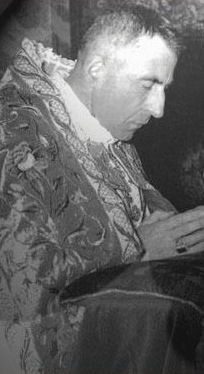
When you have extended your hands and taken the body, bow, and put your hands before your face, and worship the living Body whom you hold. Then speak with him in a low voice, and with your gaze resting upon him say to him:

I carry you, living God, who is incarnate in the bread, and I embrace you in my palms, Lord of the worlds whom no world has contained. You have circumscribed yourself in a fiery coal within a fleshly palm–you Lord, who with your palm measured out the dust of the earth. You are holy, God incarnate in my hands in a fiery coal which is a body. See, I hold you, although there is nothing that contains you; a bodily hand embraces you, Lord of natures whom a fleshly womb embraced. Within a womb you became a circumscribed body, and now within a hand you appear to me as a small morsel.

As you have made me worthy to approach you and receive you–and see, my hands embrace you confidently–make me worthy, Lord, to eat you in a holy manner and to taste the food of your body as a taste of your life. Instead of the stomach, the body’s member, may the womb of my intellect and the hand of my mind receive you. May you be conceived in me as you were in the womb of the Virgin. There you appeared as an infant, and your hidden self was revealed to the world as corporeal fruit; may you also appear in me here and be revealed from me in fruits that are spiritual works and just labors pleasing to your will.

And by your food may my desires be killed; and by the drinking of your cup may my passions be quenched. And instead of the members of myg inwardly, and excel outwardly, and run diligently, and to attain to the full stature of an interior human being. May I become a perfect man, mature in the intelligence residing in all my spiritual members, my head being crowned with the crown of perfection of all of my behavior. May I be a royal diadem in your hands, as you promised me, O hidden God whose manifestness I embrace in the perfection of your body. body, may my thoughts receive strength from the nourishment of your body. Like the manifest members of my body, may my hidden thoughts be engaged n exercise and in running and in works according to your living commands and your spiritual laws. From the food of your body and the drinking of your blood may I wax stron

St Philoxenus of Mabbug


Saint John Chrysostom, "On Leading Others to Christ"


Nothing is more frigid than a Christian who does not care about the salvation of others. You cannot plead the excuse of poverty here; the widow who gave her two mites will stand to accuse you. Peter said, “Silver or gold I have none.” Paul was so poor he often went hungry, lacking the necessary food. You cannot allege lack of education or preparation. They were unlearned men. You cannot plead infirmity. Timothy was often laid low by sickness and the Apostle had to counsel him to take a little wine for his stomach. Every one can profit his neighbor if he will do what he can.

Do not say, It is impossible for me to lead others to the faith. If you are a Christian, it is impossible for it not to be so. The natural properties of things cannot be denied. This witnessing to others is part of the very nature of being a Christian. It would be easier for the sun to cease to shine and give forth heat than for a Christian not to send forth light; easier for the light to be darkness than for this to be so.


Saint John Chrysostom, "On Living Simply"


“We who are disciples of Christ claim that our purpose on earth is to lay up treasures in heaven. But our actions often contradict our words. Many Christians build for themselves fine houses, lay out splendid gardens, construct bathhouses, and buy fields. It is small wonder, then, that many non-believers refuse to believe what we say. “If their eyes are set on mansions in heaven,” they ask, “why are they building mansions on earth? If they put their words into practice, they would give away their riches and live in simple huts.” So these non-believers conclude that we do not sincerely believe in the religion we profess; and as a result they refuse to take this religion seriously. You may say that the words of Christ on these matters are too hard for you to follow; and that while your spirit is willing, your flesh is weak. My answer is that the judgment of the non-believers about you is more accurate than your judgment of yourself. While the non-believers accuse us of hypocrisy, many of us should plead guilty.”


Tuesday, September 29, 2009

Infant of Prague


The Grace-Giving Infant Jesus of Prague

The charming statue of the Child Jesus, displayed for people to venerate in the church of Our Lady of Victory in the Lesser Town district of Prague, receives visitors from dozens of countries from all over the world every day. Many people who have prayed to God before the statue have had their prayers answered in miraculous and unusual ways. People come here to pray for help, healing, or peace; some come in trust expecting the birth of a child; and many return to give thanks.

The statue is 47 cm high and made out of wood with the surface modelled in coloured wax. It represents a small child, clothed in a long robe below which his bare feet can be seen. His sweet face attracts visitors through its beauty. The right hand of the Infant Jesus is raised in blessing, while his left hand holds a sphere surmounted by a cross – the whole of our universe rests in his hands. His royal insignia express the faith that all Christians have in common – the faith in the divinity of Jesus. In him almighty God himself, ruler over all things, became a human being.
History of the Infant Jesus of Prague

The Infant Jesus of Prague originally came from Spain. The legend tells that the Infant Jesus appeared miraculously to a certain monk, who modelled the statue based on the appearance of the apparition. According to another legend the statue belonged to St. Teresa of Avila, the founder of the Discalced Carmelites, who was aflame with a great love for the Child Jesus. She is said to have given the statue to a friend of hers, whose daughter was setting out to travel to Prague.

When the Duchess Maria Manrique de Lara came to Bohemia to marry a Bohemian nobleman in 1556, she received the statue from her mother as a wedding gift. When her daughter Polyxena of Lobkowicz was widowed, she gave the precious statue to the monastery of the Discalced Carmelites attached to the church of Our Lady of Victory in 1628.

The Carmelites placed the statue in the novitiate chapel, so that the young monks could learn from the virtues of the Child Jesus. At that time the Thirty Years' War was raging through Europe and even the Infant Jesus was not spared when the Saxon army occupied Prague in 1631. It was only after his return to Prague in 1637 that Father Cyril of the Mother of God, originally from Luxemburg, discovered the statue, abandoned in a corner. To his sorrow, however, he found that the Infant Jesus had had both hands broken off. At this moment it seemed to him that the Infant Jesus was saying to him:

"Have mercy on me and I will have mercy on you.
Give me hands and I will give you peace.
The more you honour me, the more I will bless you."

Eventually Father Cyril had new hands made for the Infant Jesus. The gold coin invested in this was returned many times over, as the Child Jesus began to bless the monastery, the local people, and the whole of Prague. Miraculous healings were attributed to him, as was the protection of Prague when it was laid siege to by the Swedes in 1639. In 1651 the statue was carried as a pilgrim round all the churches in Prague and in 1655 it was solemnly crowned by the Bishop of Prague. This event is still remembered today on the anniversary feast-day, falling on the first Sunday in May.

The statue of the Infant Jesus of Prague
Origin, size, material and appearance

According to the sources, the statue of the Infant Jesus of Prague, the original of which is venerated in the church of Our Lady of Victory in the Lesser Town district of Prague, originally came from Spain. It was probably made there in the second half of the 16th century or earlier.

The statue is 47 cm high and represents Jesus when he was only a few years old. On a 2-cm base there is a figure measuring 45 cm, dressed in a long flowing robe. Parts of the feet are visible beneath the bottom of the robe. The face is very delicately modeled and framed by medium-length curling hair.

The core of the statue is carved out of wood, which is probably covered with linen, and the surface is modeled in coloured wax. The surface of the wax is quite fragile. In order to protect the statue from damage, it's bottom half till the waist is enclosed in a silver case.
Gestures and royal attributes of the statue

The Infant Jesus has his right hand raised in blessing, while the left hand has its palm turned upwards and holds a symbol of rule over the world – the imperial orb surmounted by a cross. There is an opening in the palm of the hand, in which the orb is fixed. In the past, the statue was decorated with small jewels, presented as gifts by the faithful. The most valuable one was a copy of the Order of the Golden Fleece, which is now lost.

The crown which currently adorns the head of the Infant Jesus was made in the years 1810 to 1820. The Infant Jesus also has a second crown dating from 1767. Both crowns were made in the workshops of Prague goldsmiths. The crown is not placed directly on the statue but is fixed independently just above it.


Robes of the Infant Jesus of Prague
Purpose of dressing the statue

The ancient tradition of dressing the grace-giving statue of the Infant Jesus is intended to bring Jesus closer to the faithful as a real human being. It helps us to experience the closeness of Jesus and to express our love and reverence. It is not a case of idolatry, for the statue is not alive and it serves only as a reminder and a means of enabling a spiritual encounter with the living Christ.

The statue itself represents Jesus as a very small child, wearing a simple gown. This statue, sublime in its simplicity, is dressed in a white alb and royal robes to express the thought that is common to all Christians, that this child is a king of the house of David, and, what is more, that Jesus is Son of God and God himself, King of Kings and Lord of Lords.

The Infant Jesus of Prague has been dressed in different clothes from time immemorial, and people know him best in his royal robes. Most of his outfits are gifts of thanksgiving. The wardrobe numbers around a hundred costumes, some of which are incomplete or unusable. Some of the costumes can be seen in the museum, which the public can visit free of charge. The task of changing the Infant Jesus' robes is entrusted to the Carmelite Sisters of the Child Jesus, who help the Discalced Carmelite Fathers to look after this place of pilgrimage.
Colours of the robes

The robes of the Infant Jesus of Prague are changed so that the colour corresponds to the liturgical season, which is governed by the church calendar. Four basic colours are normally used:

* White – festive colour of purity and holiness – for feast days and the Easter and Christmas periods
* Red – colour of blood and fire, royal colour – for Holy Week, Pentecost time and feasts of the Holy Cross
* Violet – solemn colour symbolising repentance – for the Lenten and Advent seasons
* Green – colour of life and hope – for ordinary time (colour used most often)

On the feast of his coronation the Infant Jesus is usually dressed in royal robes with an ermine mantle. On special occasions other colours are used:

* Rose – colour of subdued joy – may be used on the third Sunday of Advent and the fourth Sunday of Lent
* Gold – festive colour – may replace other colours
Blue – sometimes used as a festive colour, especially for feasts of Our Lady

Chaplet to the Child Jesus

This chaplet consists of three "Our Fathers" in honor of the Holy Family, and twelve "Hail Marys" in memory of the twelve childhood years of Jesus Christ. To this chaplet of fifteen beads is attached a medal of the Infant Jesus.

The chaplet can be recited in the following way:

Begin on the medal with the words: "Holy Infant Jesus, bless and protect us!" or with the following invocation: "Divine Infant Jesus, I adore Your Cross,and I accept all the crosses you will be pleased to send me. Adorable Trinity, I offer you for the glory of the Holy Name of God all the adorations of the Sacred Hear of the Holy Infant Jesus."

You may kiss the medal.

Say three times "And the Word was made flesh and dwelt among us" and the prayer "Our Father".

Then twelve times "And the Word was made flesh and dwelt among us" and the prayer "Hail Mary". During each "Hail Mary" it is recommended that you meditate on one of the twelve mysteries of Jesus' childhood:

1. The Incarnation of the Son of God
2. The life in the womb of the Virgin Mary
3. The birth in Bethlehem
4. The adoration by the shepherds
5. The circumcision of the Lord
6. The adoration by the three magi
7. The presentation in the Temple
8. The flight to Egypt
9. The stay in Egypt
10. The return to Nazareth
11. The hidden life in Nazareth
12. The twelve-year-old Jesus in the Temple

At the end, you may add (once or thrice): "Glory be to the Father…" and "Holy Infant Jesus, bless and protect us!"

Monday, September 28, 2009

Venerable Carlo Gnocchi


G. K. Chesterton once wrote of war that if it is, “not a holy war, it is an unholy one: a massacre.” (CW, XXX, P. 307) The horrific realities of war are often not realized until they have been experienced. Until then it is easy to glorify war and get caught up in the patriotism that drives young men to fight. Venerable Don Carlo Gnocchi (pronounced NO-kee) embodies one man who was transformed by his wartime experience.

Don Carlo was an Italian priest who desired to serve as a military chaplain. Before having the honor, he encouraged young men to enlist during World War II. Even though the Italian army was currently controlled by the Fascist regime, he believed that fighting for one's country was a way of defending the weak. He rightly saw war as an opportunity to make better men because war allows men to practice heroic virtue. Eventually he was given a post with the Alpine regiment fighting in Albania. While he was serving on the front lines he witnessed countless young men sacrificing their lives for commanders who did not value life and who were ultimately fighting for an unjust cause.

When Don Carlo returned to his hometown he was dismayed that all the boys he had been teaching had decided to follow his lead and join the military. He had no choice but to re-enlist and serve alongside these young men (now fighting under German command) on the frigid Russian front. 68,000 troops were sent to Russia and only 7,000 returned. Some were lost to the fighting, but most were lost to the extreme cold.

The most difficult task Don Gnocchi had to undertake began after the war ended. He traveled throughout Italy to personally console the families of his fallen friends and give them any letters or belongings that he had been entrusted with. In his journeys he realized that the real war was not over. The real war was being fought in the lives of the victims. With so many men gone, many families were left with no one to care for them. Among the needy were a large number of children who had lost limbs because of land mines placed in the Italian countryside. Without fathers to support them, these children had no futures, and their special needs surpassed the abilities of the orphanages to care for them.

Don Carlo had no money and no plan, but he put his trust in God and began gathering all these children. He started by opening up the rectory to disabled children but he required more help and better facilities to sustain the growth and adequately care for the orphans. It took the support of many generous people and powerful Church leaders to provide the housing, food and medical attention that these poor mutilati needed.

Don Carlo's story is unique because he not only provided for the physical care of the orphans, he championed the Catholic theology of redemptive suffering and taught the children how to live it. When we offer up our suffering for others, we offer it for those we love and for the weakest people in society. Don Carlo showed his children that even the weakest of people can unite their suffering to the suffering of Christ on the cross. When they do this they are participating in the life of Christ and helping Him with His work on earth and in the Church.

The Don Carlo Gnocchi Foundazione for disabled children is well-respected and continues to thrive in Italy today. It has expanded its care to elderly people who are unable take care of themselves and for terminal cancer patients. On January 17th, 2009 a miracle attributed to Venerable Don Carlo Gnocchi was promulgated by Pope Benedict XVI and he will be beatified on October 25th, 2009.


Thursday, August 13, 2009

Dormition and Assumption of the Virgin Mary Theotokos, August 15th


Although probably not unknown in the early Church, the earliest references to the Dormition and Assumption of the Virgin Mary appear in the 4th (or possibly late 3rd) century in Liber Requiei Mariae (The Book of Mary's Repose), and in the writings of a Bishop Meliton. Some of the Church Fathers believed that the Blessed Virgin Mary (BVM) was assumed while still alive, others that she was assumed after she had died. Both views are permitted under the infallible definition of Pius XII. St. John of Damascus (d. AD 755) relates a tradition where, during the Council of Chalcedon (AD 451), the emperor Marcian and his wife wished to find the body of Mary. He tells how all the apostles had seen her death, but her tomb was empty upon inspection.

Festivals commemorating the death of the Blessed Virgin Mary were common from the 5th century onwards, although the exact dates were never universally fixed. In AD 556 the patriarch of Alexandria, Theodosius, attests to two popular Marian feasts in Egypt: Mary's death (January 16) and Assumption (August 9). Theodosius understood Mary to have died before being assumed, and according to the feast dates in Egypt at the time, she was assumed 206 days after her death. In AD 600, the emperor Mauricius decreed that the Assumption was to be celebrated on August 15. Soon, the Church in Ireland adopted this date, and it was later introduced in Rome. As the cult of Mary grew in the West, there was more pressure for the Catholic Church to define the exact nature of the Assumption. Pope Pius did this in 1950, in terms that are still rather general, and can be accepted by Western Catholics, Eastern Catholics, and Eastern Orthodox.


The Eastern Church teaches that the Virgin Mary died a fully human death before being assumed, and celebrates the feast accordingly. According to various traditions known in the East, St. Thomas was not around when Mary passed away, just as he was absent when Jesus was raised from the dead. Because he was three days late to Mary's funeral, he requested to see Mary's body. However, when her tomb was opened, her body was not found. This is not viewed as a resurrection like her Son's, but as the first fruits of our own bodily resurrection. In one of the most complicated of Christian Hymns (utilizing all 8 tones of the Eastern chanting system) the story of her journeying to heaven is revealed as her funeral procession. The apostles act as her pall-bearers. As she arrives in heaven, she is the first given the task of all the glorified saints, that of praying for us to her Son and our Lord.


Protestants have generally rejected the Assumption of Mary theologically and devotionally, probably because it is not explicitly biblical. Many Reformation denominations (like Anglicanism and Lutheranism) have set aside August 15th as a day commemorating the Blessed Virgin Mary, although without the explicit context of the Assumption. However, the Assumption of Mary is an ancient belief certainly fitting the honor of the one chosen to bear the Son of God. This dogma is solidly within the biblical tradition of holy and unique individuals being taken bodily to heaven (like Elijah and Enoch). She who is "Mother of the Lord," "full of grace," and whom "all generations shall call blessed" is certainly worthy of this honor. Church Father John of Damascus describes the importance of celebrating the Assumption quite well:

Let us then also keep the solemn [Assumption] feast today to honour the joyful departure of God's Mother...Thus, recognizing God's Mother in this Virgin, we celebrate her falling asleep, not proclaiming her as God - far be from us these heathen fables - since we are announcing her death, but recognizing her as the Mother of the Incarnate God...Let us honour her in nocturnal vigil; let us delight in her purity of soul and body, for she next to God surpasses all in purity...Let us show our love for her by compassion and kindness towards the poor...Let our souls rejoice in the Ark of God...With Gabriel, the great archangel, let us exclaim, "Hail, full of grace, the Lord is with thee. Hail, inexhaustible ocean of grace. Hail, sole refuge in grief. Hail, cure of hearts. Hail, through whom death is expelled and life is installed" (Sermon II: On the Assumption).


Prayer From the Festal Menaion

(tone 1) "By the royal command of God,
the divinely inspired apostles are caught up
from over all the world into the clouds on high.

(tone 5) Reaching thy immaculate body,
the source of Life, they salute it with mighty honour.

(tone 2) The highest powers of heaven
stood by with their own Master.

(tone 6) Seized with dread
they accompany thy inviolate body that had held God,
and they went on high before thee, crying, unseen,
to the hierarchies above:
'Lo, the Queen of all, the Maid of God, is nigh.'

(tone 3) Open wide the gates and receive above the world
the Mother of the everlasting Light.

(tone 7) For through her the salvation of all mankind has come.
We have not the strength to look upon her,
and are unable to render honours worthy of her,

(tone 4) for her excellence is past all understanding.

(tone 8) Therefore, O most pure Theotokos,
who livest forever with Thy Son, the King Who brings life,
pray without ceasing that thy newborn people
be guarded on every side and saved from all adverse assault:
for we are under thy protection,

(tone 1) and we bless thee in beauty and light unto all ages."
From the Vespers of the Dormition

__________________________________________________________________

The Assumption of the Blessed Virgin Mary – August 15
Adapted from The Liturgical Year by Abbot Gueranger


Ancient Coptic Rite Icon of the Assumption “Today the Virgin Mary ascended to Heaven; rejoice, for She reigns with Christ forever.” The Church will close Her chants on this glorious day with this sweet antiphon, which resumes the object of the Feast and the spirit in which it should be celebrated.

No other solemnity breathes, like this one, at once triumph and peace; none better answers to the enthusiasm of the many and the serenity of souls consummated in love. Assuredly that was as great a triumph when Our Lord, rising by His own power from the tomb, cast Hell into dismay; but to our souls, so abruptly drawn from the abyss of sorrows on Golgotha, the suddenness of the victory caused a sort of stupor to mingle with the joy of that greatest of days. In presence of the prostrate angels, the hesitating apostles, the women seized with fear and trembling, one felt that the divine isolation of the Conqueror of death was perceptible even to His most intimate friends, and kept them, like Magdalene, at a distance.

Mary’s death, however, leaves no impression but peace; that death had no other cause than love. Being a mere creature, She could not deliver Herself from that claim of the old enemy; but leaving Her tomb filled with flowers; She mounts up to Heaven, flowing with delights, leaning upon Her Beloved (Cant. 8: 5). Amid the acclamations of the daughters of Sion, who will henceforth never cease to call Her Blessed, She ascends surrounded by choirs of heavenly spirits joyfully praising the Son of God. Never more will shadows veil, as they did on earth, the glory of the most beautiful daughter of Eve. Beyond the immovable Thrones, beyond the dazzling Cherubim, beyond the flaming Seraphim, onward She passes, delighting the heavenly city with Her sweet perfumes. She stays not till She reaches the very confines of the Divinity; close to the throne of honor where Her Son, the King of ages, reigns in justice and in power; there She is proclaimed Queen, there She will reign for evermore in mercy and in goodness.

Among the feasts of saints, this is the solemnity of solemnities. “Let the mind of man,” says St. Peter Damian, “be occupied in declaring Her magnificence; let his speech reflect Her majesty. May the Sovereign of the world deign to accept the goodwill of our lips, to aid our insufficiency, to illumine with her own light the sublimity of this day.”

It is no new thing, then, that Mary’s triumph fills the hearts of Christians with enthusiasm. If certain ancient calendars give to this Feast the title of Dormition of the Blessed Virgin Mary, we cannot thence conclude that in those times the Feast had no other object than Mary’s holy death; the Greeks, from whom we have the expression, have always included in the solemnity the glorious triumph that followed Her death.

At Rome the Assumption or Dormition of the Holy Mother of God appears in the 7th century to have already been celebrated for an indefinite length of time; nor does it seem to have had any other day than August 15. According to Nicephorus Callistus, the same date was assigned to it for Constantinople by the Emperor Mauritius at the end of the 6th century. The historian notes, at the same time, the origin of several other solemnities, while of the Dormition alone, he does not say that it was established by Mauritius on such a day; hence learned authors have concluded that the Feast itself already existed before the imperial decree was issued, which was thus only intended to put an end to its being celebrated on various days.

At that very time, far away from Byzantium, the Merovingian Franks celebrated the glorification of Our Lady on January 18. However the choice of this day may be accounted for, it is remarkable that the Copts on the borders of the Nile announce on January 28, the repose of the Virgin Mary, Mother of God, and the Assumption of Her body into Heaven; they, however, repeat the announcement on August 21, and two weeks earlier they, like the Greeks, begin their Lent in honor of the Mother of God.

Some authors think that the Assumption has been kept from apostolic times; but the primitive liturgical documents are silent about it. The hesitation as to the date of its celebration, and the liberty so long allowed with regard to it, seem to point to the spontaneous initiative of divers Churches, owing to some fact attracting attention to the mystery or throwing some light upon it. Of this nature we may reckon the account everywhere spread abroad about the year 451, in which Juvenal of Jerusalem related to the Empress St. Pulcheria and her husband Marcian the history of the tomb which the Apostles had prepared for Our Lady at the foot of Mount Olivet, and which was found empty of its precious deposit. The following words of St. Andrew of Crete in the 7th century show how the solemnity of the Assumption gained ground in consequence of such circumstances. The Saint was born at Damascus, became a monk at Jerusalem, was afterwards Deacon at Constantinople, and lastly Bishop of the celebrated island from which he takes his name; no one then could speak for the East with better authority. “The present solemnity,” he says, “is full of mystery, having for its object to celebrate the day whereon the Mother of God fell asleep; this solemnity is too elevated for any discourse to reach; by some this mystery has not always been celebrated, but now all love and honor it. Silence long preceded speech, but now love divulges the secret. The gift of God must be manifested, not buried; we must show it forth, not as recently discovered, but as having recovered its splendor. Some of those who lived before us knew it but imperfectly; that is no reason for always keeping silence about it; it has not become altogether obscured; let us proclaim it and keep a feast. Today let the inhabitants of Heaven and earth be united, let the joy of Angels and men be one, let every tongue exult and sing Hail to the Mother of God.”

In 1870 an earnest desire was expressed to have the doctrine of Mary’s Assumption defined as a dogma of faith; however, due to the Italian civil war, the Vatican Council was suspended too soon to complete our Lady’s crown. This was accomplished in 1950, by His Holiness, Pope Pius XII.

Sunday, August 9, 2009

THE DREADFUL STATE OF THE LUKEWARM SOUL


Sermon by St John Vianney

In speaking to you today, my dear brethren, of the dreadful state of the lukewarm soul, my purpose is not to paint for you a terrifying and despairing picture of the soul which is living in mortal sin without even having the wish to escape from this condition. That poor unfortunate creature can but look forward to the wrath of God in the next life. Alas! These sinners hear me; they know well of whom I am speaking at this very moment.... We will go no further, for all that I would wish to say would serve only to harden them more.

In speaking to you, my brethren, of the lukewarm soul, I do not wish, either, to speak of those who make neither their Easter duty nor their annual Confession. They know very well that in spite of all their prayers and their other good works they will be lost. Let us leave them in their blindness, since they want to remain that way....

Nor do I understand, brethren, by the lukewarm soul, that soul who would like to be worldly without ceasing to be a child of God. You will see such a one at one moment prostrate before God, his Saviour and his Master, and the next moment similarly prostrate before the world, his idol.

Poor blind creature, who gives one hand to God and the other to the world, so that he can call both to his aid, and promise his heart to each in turn! He loves God, or rather, he would like to love Him, but he would also like to please the world. Then, weary of wanting to give his allegiance to both, he ends by giving it to the world alone. This is an extraordinary life and one which offers so strange a spectacle that it is hard to persuade oneself that it could be the life of one and the same person. I am going to show you this so clearly that perhaps many among you will be hurt by it. But that will matter little to me, for I am always going to tell you what I ought to tell you, and then you will do what you wish about it....

I would say further, my brethren, that whoever wants to please both the world and God leads one of the most unhappy of lives. You shall see how. Here is someone who gives himself up to the pleasures of the world or develops some evil habit.

How great is his fear when he comes to fulfil his religious duties; that is, when he says his prayers, when he goes to Confession, or wants to go to Holy Communion! He does not want to be seen by those with whom he has been dancing and passing nights at the cabarets, where he has been giving himself over to many kinds of licentiousness. Has he come to the stage when he is going to deceive his confessor by hiding the worst of his actions and thus obtain permission to go to Holy Communion, or rather, to commit a sacrilege? He would prefer to go to Holy Communion before or after Mass, that is to say, when there is no one present. Yet he is quite happy to be seen by the good people who know nothing about his evil life and among whom he would like to arouse good opinions about himself. In front of devout people he talks about religion. When he is with those who have no religion, he will talk only about the pleasures of the world. He would blush to fulfil his religious practices in front of his companions or those boys and girls who share his evil ways....

This is so true that one day someone asked me to allow him to go to Holy Communion in the sacristy so that no one would see him. Is it possible, my brethren, that one could think upon such horrible behaviour without shuddering?

But we shall proceed further and you will see the embarrassment of these poor people who want to follow the world without -- outwardly at any rate -- leaving God. Here is Easter approaching. They must go to Confession. It is not, of course, that they want to go or that they feel any urge or need to receive the Sacrament of Penance. They would be only too pleased if Easter came around about once every thirty years. But their parents still retain the exterior practice of religion. They will be happy if their children go to the altar, and they keep urging them, then, to go to Confession. In this, of course, they make a mistake. If only they would just pray for them and not torment them into committing sacrileges. So to rid themselves of the importunity of their parents, to keep up appearances, these people will get together to find out who is the best confessor to try for absolution for the first or second time

"Look," says one, "my parents keep nagging at me because I haven't been to Confession. Where shall we go?" "It is of no use going to our parish priest; he is too scrupulous. He would not allow us to make our Easter duty. We will have to try to find So-and-So. He let this one and that one go through, and they are worse than we are. We have done no more harm than they have."

Another will say: "I assure you that if it were not for my parents I would not make my Easter duty at all. Our catechism says that to make a good Confession we must give up sin and the occasions of sin, and we are doing neither the one nor the other. I tell you sincerely that I am really embarrassed every time Easter comes around. I will be glad when the time comes for me to settle down and to cease gallivanting. I will make a confession then of my whole life, to put right the ones I am making now. Without that I would not die happy."

"Well," another will say to him, "when that time comes you ought to go to the priest who has been hearing your confessions up to the present. He will know you best." "Indeed no! I will go to the one who would not give me absolution, because he would not want to see me damned either."

"My word, aren't you good! That means nothing at all. They all have the same power."

"That is a good thing to remember when we are doing what we ought to do. But when we are in sin, we think otherwise.

One day I went to see a girl who was pretty careless. She told me that she was not going back to Confession to the priests who were so easy and who, in making it seem as if they wanted to save you, pushed you into Hell."

That is how many of these poor blind people behave. I "Father," they will say to the priest, "I am going to Confession to you because our parish priest is too exacting. He wants to make us promise things which we cannot hold to. He would have us all saints, and that is not possible in the world. He would want us never to go to dances, nor to frequent cabarets or amusements. If someone has a bad habit, he will not give Absolution until the habit has been given up completely. If we had to do all that we should never make our Easter duty at all. My parents, who are very religious, are always after me to make my Easter duty. I will do all I can. But no one can say that he will never return to these amusements, since he never knows when he is going to encounter them."

"Ah!" says the confessor, quite deceived by this sincere sounding talk, "I think your parish priest is perhaps a little exacting. Make your act of contrition, and I will give you Absolution. Try to be good now."

That is to say: Bow your head; you are going to trample in the adorable Blood of Jesus Christ; you are going to sell your God like Judas sold Him to His executioners, and tomorrow you will go to Holy Communion, where you will proceed to crucify Him. What horror! What abomination! Go on, vile Judas, go to the holy table, go and give death to your God and your Saviour! Let your conscience cry out, only try to stifle its remorse as much as you can.... But I am going too far, my brethren. Let us leave these poor blind creatures in their gloom.

I think, brethren, that you would like to know what is the state of the lukewarm soul. Well, this is it. A lukewarm soul is not yet quite dead in the eyes of God because the faith, the hope, and the charity which are its spiritual life are not altogether extinct. But it is a faith without zeal, a hope without resolution, a charity without ardour....

Nothing touches this soul: it hears the word of God, yes, that is true; but often it just bores it. Its possessor hears it with difficulty, more or less by habit, like someone who thinks that he knows enough about it and does enough of what he should.

Any prayers which are a bit long are distasteful to him. This soul is so full of whatever it has just been doing or what it is going to do next, its boredom is so great, that this poor unfortunate thing is almost in agony. It is still alive, but it is not capable of doing anything to gain Heaven....

For the last twenty years this soul has been filled with good intentions without doing anything at all to correct its habits.

It is like someone who is envious of anyone who is on top of the world but who would not deign to lift a foot to try to get there himself. It would not, however, wish to renounce eternal blessings for those of the world. Yet it does not wish either to leave the world or to go to Heaven, and if it can just manage to pass its time without crosses or difficulties, it would never ask to leave this world at all. If you hear someone with such a soul say that life is long and pretty miserable, that is only when everything is not going in accordance with his desires. If God, in order to force such a soul to detach itself from temporal things, sends it any cross or suffering, it is fretful and grieving and abandons itself to grumbles and complaints and often even to a kind of despair. It seems as if it does not want to see that God has sent it these trials for its good, to detach it from this world and to draw it towards Himself. What has it done to deserve these trials? In this state a person thinks in his own mind that there are many others more blameworthy than himself who have not to submit to such trials.

In prosperous times the lukewarm soul does not go so far as to forget God, but neither does it forget itself. It knows very well how to boast about all the means it has employed to achieve its prosperity. It is quite convinced that many others would not have achieved the same success. It loves to repeat that and to hear it repeated, and every time it hears it, it is with fresh pleasure. The individual with the lukewarm soul assumes a gracious air when associating with those who flatter him. But towards those who have not paid him the respect which he believes he has deserved or who have not been grateful for his kindnesses, he maintains an air of frigid indifference and seems to indicate to them that they are ungrateful creatures who do not deserve to receive the good which he has done them....

If I wanted to paint you an exact picture, my brethren, of the state of a soul which lives in tepidity, I should tell you that it is like a tortoise or a snail. It moves only by dragging itself along the ground, and one can see it getting from place to place with great difficulty. The love of God, which it feels deep down in itself, is like a tiny spark of fire hidden under a heap of ashes.

The lukewarm soul comes to the point of being completely indifferent to its own loss. It has nothing left but a love without tenderness, without action, and without energy which sustains it with difficulty in all that is essential for salvation. But for all other means of Grace, it looks upon them as nothing or almost nothing. Alas, my brethren, this poor soul in its tepidity is like someone between two bouts of sleep. It would like to act, but its will has become so softened that it lacks either the force or the courage to accomplish its wishes.

It is true that a Christian who lives in tepidity still regularly -- in appearance at least -- fulfils his duties. He will indeed get down on his knees every morning to say his prayers. He will go to the Sacraments every year at Easter and even several times during the course of the twelve months. But in all of this there will be such a distaste, so much slackness and so much indifference, so little preparation, so little change in his way of life, that it is easy to see that he is only fulfilling his duties from habit and routine .... because this is a feast and he is in the habit of carrying them out at such a time. His Confessions and his Communions are not sacrilegious, if you like, but they are Confessions and Communions which bear no fruit -- which, far from making him more perfect and more pleasing to God, only make him more unworthy. As for his prayers, God alone knows what -- without, of course, any preparation -- he makes of these.

In the morning it is not God who occupies his thoughts, nor the salvation of his poor soul; he is quite taken up with thoughts of work. His mind is so wrapped up in the things of earth that the thought of God has no place in it. He is thinking about what he is going to be doing during the day, where he will be sending his children and his various employees, in what way he will expedite his own work. To say his prayers, he gets down on his knees, undoubtedly, but he does not know what he wants to ask God, nor what he needs, nor even before whom he is kneeling. His careless demeanour shows this very clearly. It is a poor man indeed who, however miserable he is, wants nothing at all and loves his poverty. It is surely a desperately sick person who scorns doctors and remedies and clings to his infirmities.

You can see that this lukewarm soul has no difficulty, on the slightest pretext, in talking during the course of his prayers.

For no reason at all he will abandon them, partly at least, thinking that he will finish them in another moment. Does he want to offer his day to God, to say his Grace? He does all that, but often without thinking of the one who is addressed. He will not even stop working. If the possessor of the lukewarm soul is a man, he will turn his cap or his hat around in his hands as if to see whether it is good or bad, as though he had some idea of selling it. If it is a woman, she will say her prayers while slicing bread into her soup, or putting wood on the fire, or calling out to her children or maid. If you like, such distractions during prayer are not exactly deliberate. People would rather not have them, but because it is necessary to go to so much trouble and expend so much energy to get rid of them, they let them alone and allow them to come as they will.

The lukewarm Christian may not perhaps work on Sunday at tasks which seem to be forbidden to anyone who has even the slightest shred of religion, but doing some sewing, arranging something in the house, driving sheep to the fields during the times for Masses, on the pretext that there is not enough food to give them -- all these things will be done without the slightest scruple, and such people will prefer to allow their souls and the souls of their employees to perish rather than endanger their animals. A man will busy himself getting out his tools and his carts and harrows and so on, for the next day; he will fill in a hole or fence a gap; he will cut various lengths of cords and ropes; he will carry out the churns and set them in order. What do you think about all this, my brethren? Is it not, alas, the simple truth? ....

A lukewarm soul will go to Confession regularly, and even quite frequently. But what kind of Confessions are they? No preparation, no desire to correct faults, or, at the least, a desire so feeble and so small that the slightest difficulty will put a stop to it altogether. The Confessions of such a person are merely repetitions of old ones, which would be a happy state of affairs indeed if there were nothing to add to them. Twenty years ago he was accusing himself of the same things he confesses today, and if he goes to Confession for the next twenty years, he will say the same things. A lukewarm soul will not, if you like, commit the big sins. But some slander or back-biting, a lie, a feeling of hatred, of dislike, of jealousy, a slight touch of deceit or double-dealing -- these count for nothing with it. If it is a woman and you do not pay her all the respect which she considers her due, she will, under the guise of pretending that God has been offended, make sure that you realise it; she could say more than that, of course, since it is she herself who has been offended. It is true that such a woman would not stop going to the Sacraments, but her dispositions are worthy of compassion.

On the day when she wants to receive her God, she spends part of the morning thinking of temporal matters. If it is a man, he will be thinking about his deals and his sales. If it is a married woman, she will be thinking about her household and her children. If it is a young girl, her thoughts will be on her clothes.

If it is a boy, he will be dreaming about passing pleasures and so on. The lukewarm soul shuts God up in an obscure and ugly kind of prison. Its possessor does not crucify Him, but God can find little joy or consolation in his heart. All his dispositions proclaim that his poor soul is struggling for the breath of life.

After having received Holy Communion, this person will hardly give another thought to God in all the days to follow. His manner of life tells us that he did not know the greatness of the happiness which had been his.

A lukewarm Christian thinks very little upon the state of his poor soul and almost never lets his mind run over the past. If the thought of making any effort to be better crosses his mind at all, he believes that once he has confessed his sins, he ought to be perfectly happy and at peace. He assists at Holy Mass very much as he would at any ordinary activity. He does not think at all seriously of what he is doing and finds no trouble in chatting about all sorts of things while on the way there. Possibly he will not give a single thought to the fact that he is about to participate in the greatest of all the gifts that God, all-powerful as He is, could give us. He does give some thought to the needs of his own soul, yes, but a very small and feeble amount of thought indeed. Frequently he will even present himself before the presence of God without having any idea of what he is going to ask of Him. He has few scruples in cutting out, on the least pretext, the Asperges and the prayers before Mass. During the course of the service, he does not want to go to sleep, of course, and he is even afraid that someone might see him, but he does not do himself any violence all the same. He does not want, of course, to have distractions during prayer or during the Holy Mass, yet when he should put up some little fight against them, he suffers them very patiently, considering the fact that he does not like them. Fast days are reduced to practically nothing, either by advancing the time of the main meal or, under the pretext that Heaven was never taken by famine, by making the collation so abundant that it amounts to a full meal. When he performs good or beneficial actions, his intentions are often very mixed -- sometimes it is to please someone, sometimes it is out of compassion, and sometimes it is just to please the world. With such people everything that is not a really serious sin is good enough. They like doing good, being faithful, but they wish that it did not cost them anything or, at least, that it cost very little. They would like to visit the sick, indeed, but it would be more convenient if the sick would come to them. They have something to give away in alms, they know quite well that a certain person has need of help, but they wait until she comes to ask them instead of anticipating her, which would make the kindness so very much more meritorious. We will even say, my brethren, that the person who leads a lukewarm life does not fail to do plenty of good works, to frequent the Sacraments, to assist regularly at all church services, but in all of this one sees only a weak, languishing faith, hope which the slightest trial will upset, a love of God and of neighbour which is without warmth or pleasure. Everything that such a person does is not entirely lost, but it is very nearly so.

See, before God, my brethren, on what side you are. On the side of the sinners, who have abandoned everything and plunge themselves into sin without remorse? On the side of the just souls, who seek but God alone? Or are you of the number of these slack, tepid, and indifferent souls such as we have just been depicting for you? Down which road are you travelling?

Who can dare assure himself that he is neither a great sinner nor a tepid soul but that he is one of the elect? Alas, my brethren, how many seem to be good Christians in the eyes of the world who are really tepid souls in the eyes of God, Who knows our inmost hearts....

Let us ask God with all our hearts, if we are in this state, to give us the grace to get out of it, so that we may take the route that all the saints have taken and arrive at the happiness that they are enjoying. That is what I desire for you....